
Market pricing
Trading card prices that show where they came from
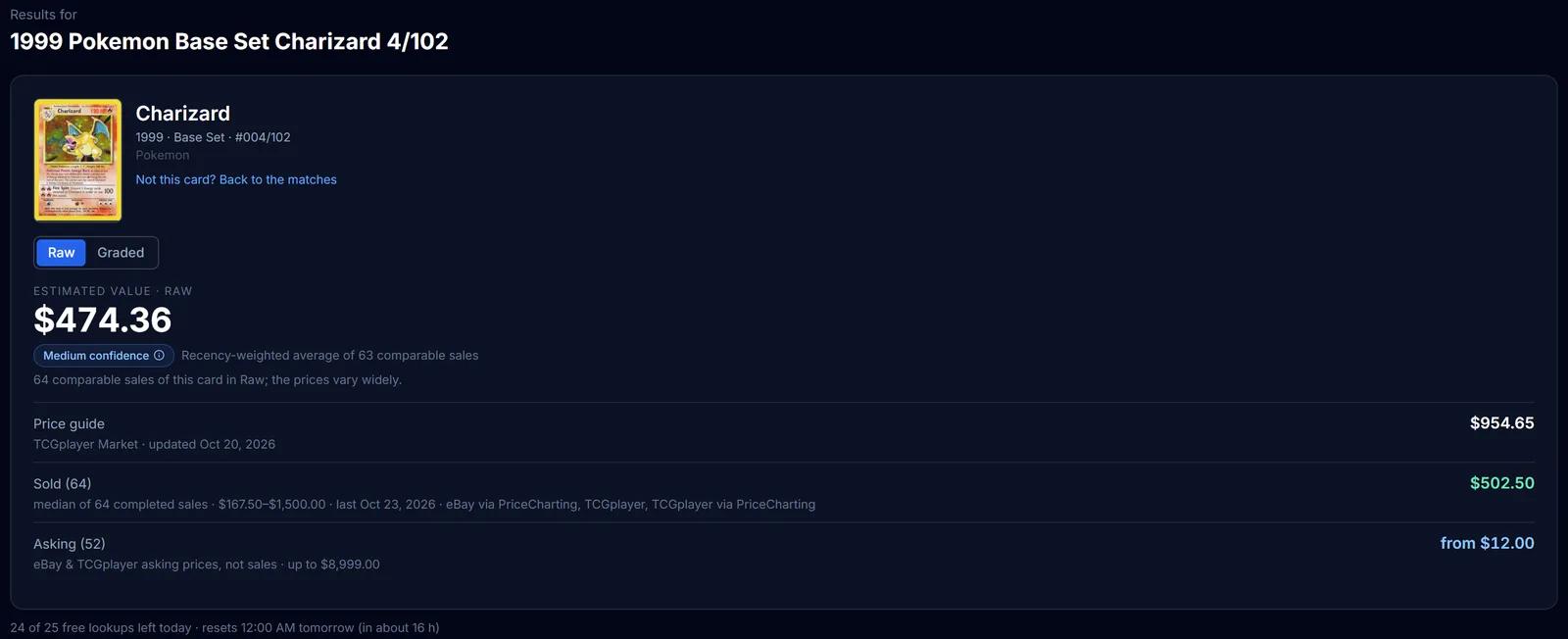
SlabIQ puts a card's price guide, completed sales and current asking prices side by side, each naming its source, and turns them into an estimated value with a confidence level. Try it free on any card, then use the same data while you price a batch.
No credit card required · 500 scans / month on the free plan
Why it matters
One number isn't a price
A single "value" with no source can mean a guide price, a last sale or somebody's optimistic listing. Pricing a card from it is guesswork, and pricing a batch from it is guesswork repeated.
SlabIQ keeps the pieces apart: the price guide, what comparable copies actually sold for, and what sellers are asking right now. The estimate is built from those pieces and tells you how confident it is.
How it works
How Market Pricing works
- Step 1
Pick the exact card
Search SlabIQ's catalog. When several cards match, choose the right one; switch between printings, and add a language like Japanese to search that printing.
- Step 2
Choose raw or graded
Price the card raw, or pick a grader and grade: PSA, BGS, SGC, CGC, CSG, TAG, HGA, ISA, GMA or ACE.
- Step 3
Read the evidence
See the price guide with its source and date, the median of completed sales with their range, and current asking prices, labelled as asking prices rather than sales.
- Step 4
Get an estimate
With three or more comparable sales, the estimate weights recent sales more heavily and screens out outliers. Otherwise it falls back to the price guide, and with neither it says there's no estimate instead of showing $0.
Capabilities
What you can do with Market Pricing
Free price checker
Check card values on slabiq.app without an account. Free lookups are limited per day, and lookups that find no price don't count.
TCGplayer market prices
Market prices from TCGplayer data for Pokémon, Magic: The Gathering, Yu-Gi-Oh!, One Piece and other TCGs, updated daily, with price history for raw cards.
Completed sales, kept separate
Sold prices are shown as a median with their range and date, never mixed in with asking prices.
Live asking prices
Current asking prices from eBay and TCGplayer listings show where the market is being offered, labelled as asks.
Confidence on every estimate
High, medium, low or insufficient data, so a thin market looks thin.
Card Radar in the app
Search or scan a card to see lowest active, median and recent sales, average asking price, recent sales and active listings, and a market history chart.
Buy analysis
Card Radar suggests aggressive, target and maximum buy prices from market value, with thresholds you can set, and shows the margin at any asking price you enter.
Pricing while you list
The batch review screen shows the same estimate, price guide, sales and asks beside each card; one click copies the estimate into the card's price.
A catalog to match against
Scans are matched to SlabIQ's card catalog, which you can browse for free: every set's checklist with printings, rarity and market prices.
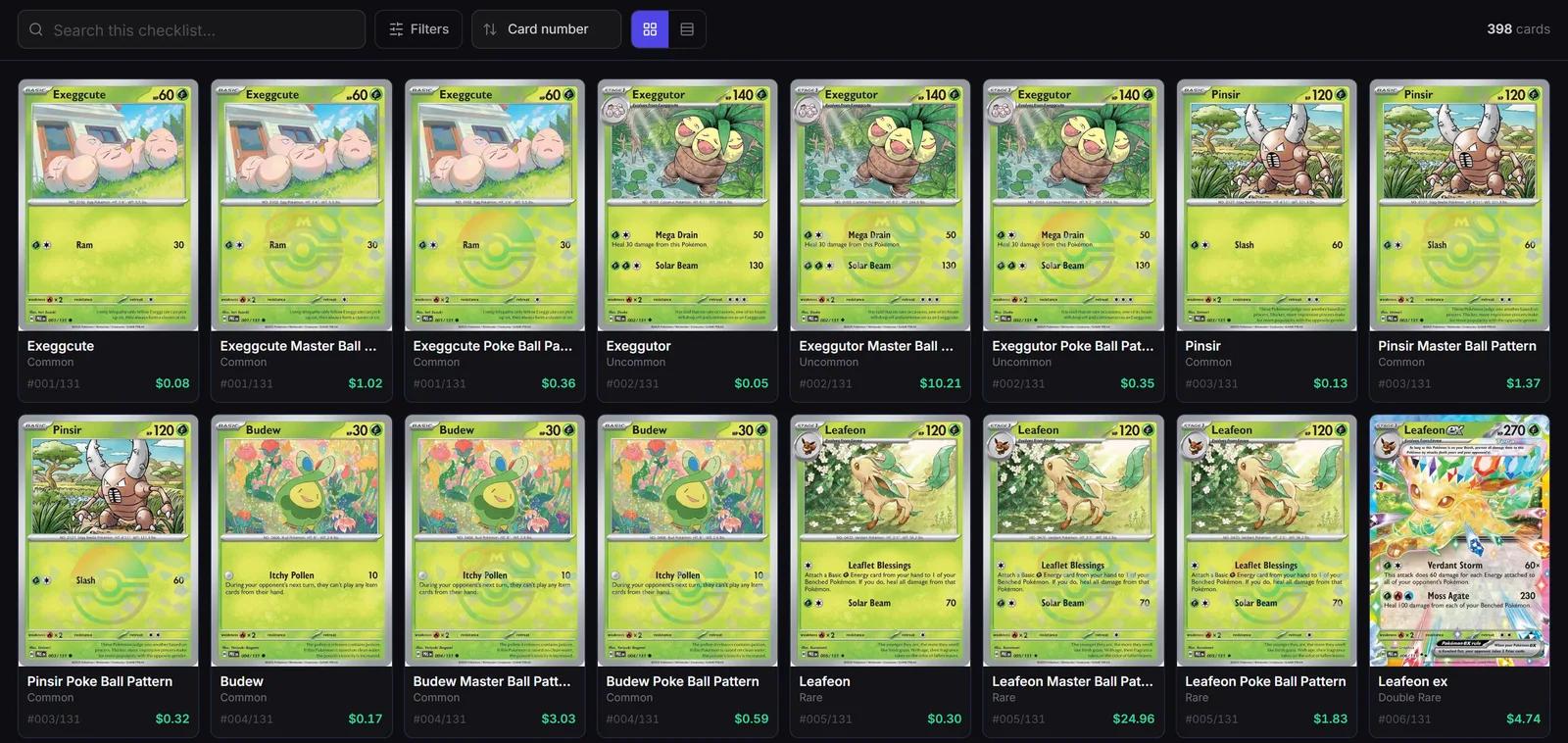
Screens are slabiq.app's public price checker and card catalog as any visitor sees them, captured October 2026.
Good to know
What to expect
- An estimate is not a guaranteed sale price. It reflects the sales and prices SlabIQ can see for that card and grade.
- Coverage is strongest for trading card games. Many sports cards don't have a price on file yet; when that happens SlabIQ says so instead of showing a number.
- TCGplayer market prices and recent sales cover raw cards; graded prices come from completed sales of that grade where they're available.
- Signed-in members see more detail than anonymous visitors, including individual sales, listings, other conditions and price history.
Use cases
Who uses Market Pricing
Sellers pricing a batch
Price each card from the evidence beside it in review instead of opening a tab per card.
Buyers at shows
Check a card in Card Radar, see suggested buy prices and the margin at the seller's asking price.
Collectors
Look up what a card is worth for free, then track your collection's value from the same TCGplayer data.
Questions
Market Pricing: common questions
Is the SlabIQ price checker free?
Where do SlabIQ's prices come from?
How is the estimated value calculated?
Does it price graded cards?
Does it work for sports cards?
Keep exploring
Related features and tools
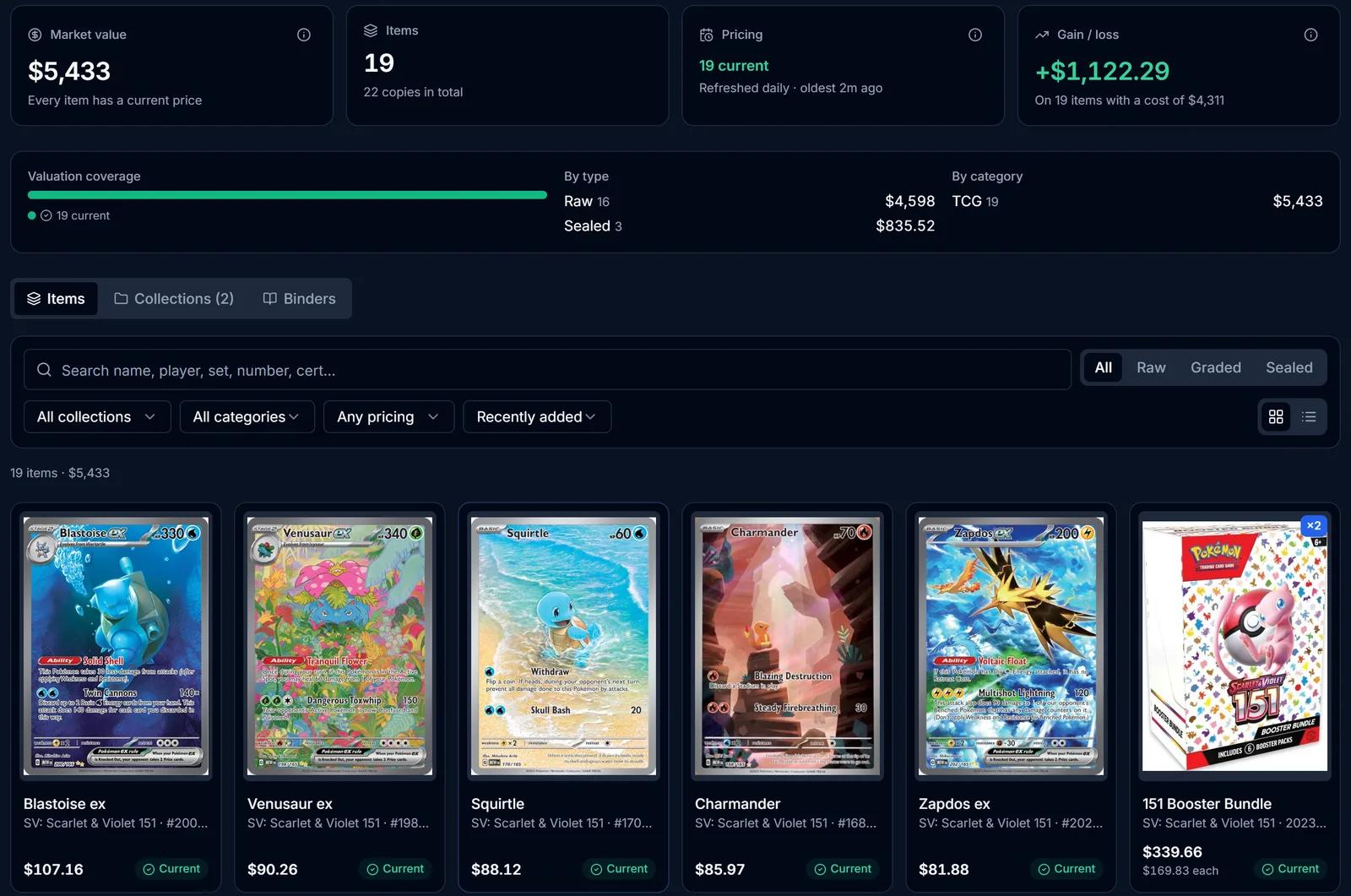
Collection Tracker
A catalog-linked collection valued daily from TCGplayer data, with gain and loss and TCG set binders.
Learn more about Collection Tracker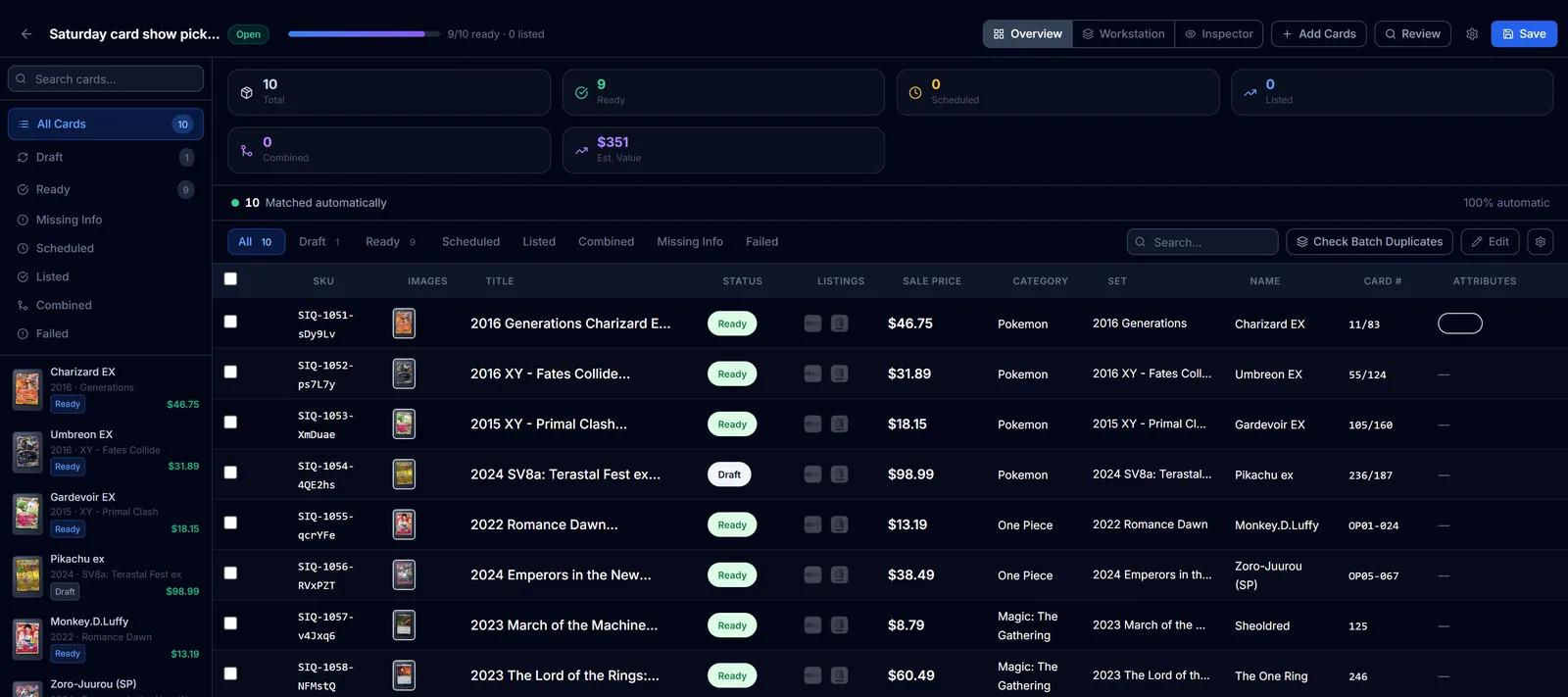
Batch Scanner
Upload a stack of scans or phone photos and identify every card in one batch, with uncertain matches set aside for review.
Learn more about Batch Scanner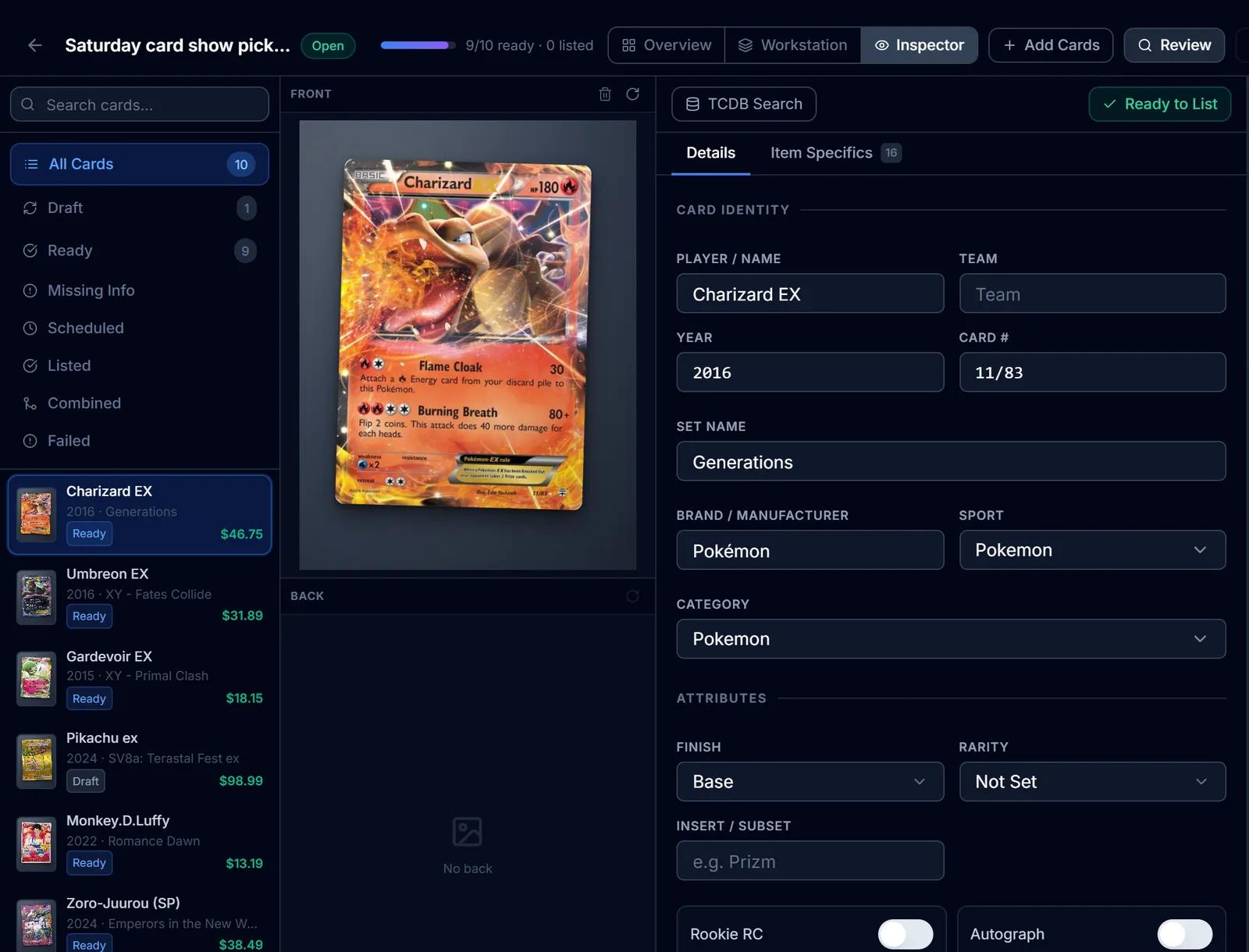
eBay Listing
eBay listings built from the identified card: titles, item specifics, graded fields, Best Offer and scheduled starts.
Learn more about eBay Listing
Try Market Pricing on your own cards
Create a free SlabIQ account and see it work with your own inventory. No credit card required.
500 scans / month on the free plan